
A word from the van
This guide is what removers of 30 years tell us. They have spent three decades carrying other people's lives up and down stairs: Victorian terraces with a dog-leg landing, fourth-floor tenements with no lift, farmhouses at the end of a mile of single-track. Along the way they have seen every way a move can go over budget, and they say nearly all of them were avoidable.
Here's the first thing they tell us: a removal quote isn't a price for "a 3-bed house". It's a price for your 3-bed house, with your loft, your road, your stairs and your completion day. Two houses with the same number of bedrooms can be hundreds of pounds apart, and that isn't a con. It's the job.
So below we show you how removers actually price a move, what people really paid in 2026 (real figures, sourced, not guesses), and the little things that save you money or cost you a fortune. Take what's useful. Then get a few proper quotes and compare them like-for-like.
How removal quotes are actually worked out
Strip away the letterhead and almost every removal quote in Britain comes down to the same sum. Removers work out how much stuff, how many people, for how long, then add travel, access and extras.
1. Volume
Everything is measured in cubic feet. As a rough guide, a 1-bed is around 500 cu ft, a 2-bed about 800, a 3-bed about 1,500 and a 4-bed about 1,850 [4]. Volume decides the size of lorry, how many trips, and how long loading takes. That's why every box you don't take saves money.
2. Crew size
Two people suit a small flat with easy parking. For 3–4 bed houses, three or four porters often finish hours sooner, so a bigger crew can actually cost less overall [1]. Ask for the team plan.
3. Hours
A two-person crew and van typically runs £50–£80 an hour [3]. Minimum bookings of 3–4 hours are common, and many firms start the clock when the lorry leaves the depot, not when it reaches your door [1].
4. Distance
Over 10–50 miles, expect roughly £75–£150 on top of a local price. Over 50–150 miles, roughly £150–£300 [1]. One ballpark for long moves is about £35 per hour plus £1.50 per mile [3]. Overnight stops, tolls and ferries are on top.
5. Access
This is the biggest swing factor. Stairs, no lift, a 30-metre carry from the nearest legal parking spot, narrow doorways, a booked goods-lift slot. Konnect You reviews that mentioned access problems reported extras averaging £579 [1].
6. Extras
Packing (about £373 on average), dismantling and reassembly (about £145), storage (about £122 a month for 50 sq ft) [1], plus specialist items such as pianos, range cookers and gym kit, which are quoted separately.
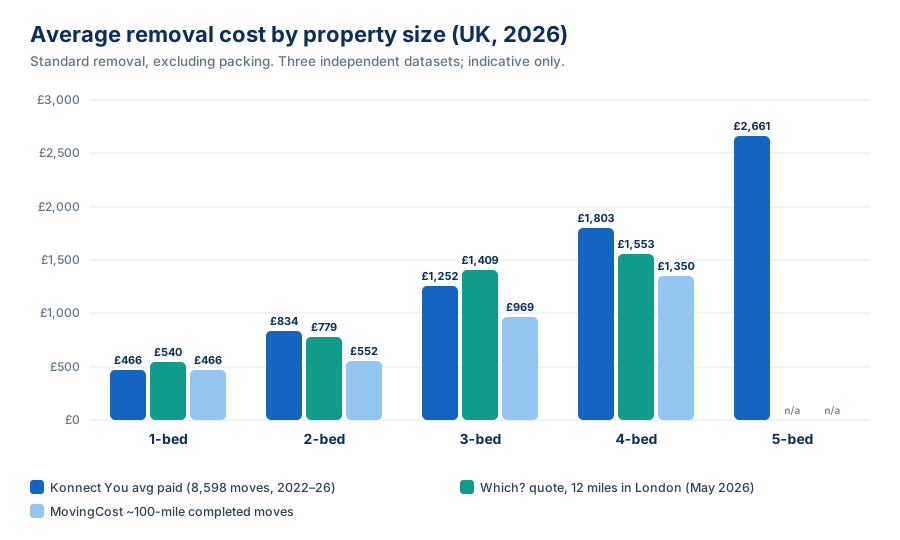
2026 removal prices by property size
Here's what people actually paid, from three independent 2026 datasets, plus an indicative long-distance band. The figures differ because the samples differ (a national comparison platform, Which?'s London quotes, and one firm's completed jobs), so use the spread as your sense-check, not a single "right" number.
| Property | Typical volume[4] | Local / regional average paid[1] | Which? quote 12 miles, London[5] | With packing (Which?)[5] | ~100 miles completed jobs[4] | Long distance 50–150 mi indicative |
|---|---|---|---|---|---|---|
| 1-bed flat | ~500 cu ft | £466 | £540 | £899 | £466 | £616–£766 |
| 2-bed | ~800 cu ft | £834 | £779 | £1,220 | £552 | £984–£1,134 |
| 3-bed | ~1,500 cu ft | £1,252 | £1,409 | £2,075 | £969 | £1,402–£1,552 |
| 4-bed | ~1,850 cu ft | £1,803 | £1,553 | £2,307 | £1,350 | £1,953–£2,103 |
| 5-bed | n/a | £2,661 | n/a | n/a | n/a | £2,811–£2,961 |
How to read this: "Local / regional" = Konnect You average paid across 8,598 verified moves, 2022–2026 (updated 30 Sept 2026). Which? = AnyVan quotes gathered May 2026 for a July 2026 move of 12 miles within London; Which? doesn't recommend DIY van hire beyond two bedrooms. "~100 miles" = MovingCost analysis of 1,200+ completed moves by one Northampton-based firm (standard service only). The long-distance column is our own indicative calculation: the Konnect You average plus its published £150–£300 uplift for 50–150-mile intercity moves. For comparison, Checkatrade puts the average UK long-distance move at around £1,025 [3], and reallymoving's 2026 report puts the average removal under 30 miles at £624, down from £709 [2]. All prices are indicative, not quotes.
Want a figure for your own move? The removal cost calculator starts from these averages and adds your distance, access, packing and storage, line by line.
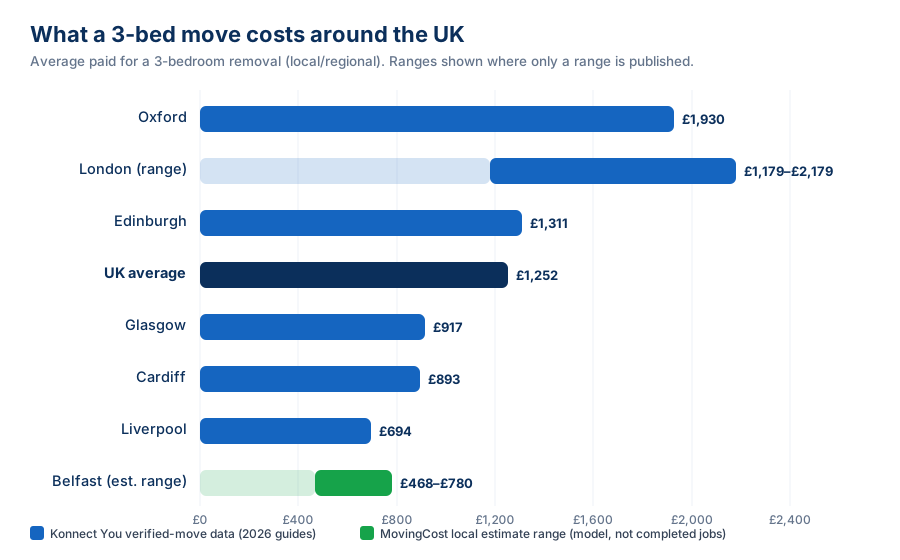
How removal costs vary across the UK
Where you live changes the price more than most people expect. It's partly labour and overheads, but mostly access: parking suspensions, red routes, tenement stairs, controlled parking zones and, out in the islands, ferry timetables.
London & South East real data
- London average ~£918, with most moves £735–£1,306. 1-bed flats £295–£507; 3-bed houses £1,179–£2,179 [6].
- West London runs ~£1,090 a move, North London ~£660 [6].
- Commuter towns can beat central London on price. Oxford averages £1,930 for a 3-bed, and Guildford, Kingston and Reading are among the dearest [1].
- Parking: there's no city-wide permit; every borough sets its own rules. Lewisham, for example, charges £62 admin + £56 per pay-and-display bay per day and wants 5 working days' notice [10]. Stop on a red route and it's a £160 fine [6].
Rest of England real data
- The North is consistently cheapest. Liverpool averages £694 for a 3-bed, around 45% below the UK average, with Newcastle, Manchester and Sheffield also below average [1].
- Bristol runs above average as firms cover the wider commuter area [1].
- One industry benchmark puts the regions roughly at: South East +10%, South West +4%, Midlands on the national baseline, North −8% [11] benchmark index.
Wales real data (Cardiff)
- Cardiff averages £557 for a 1–2 bed, £893 for a 3-bed and £1,989 for a 4–5 bed [7].
- In Cardiff's busiest controlled zones, a parking waiver costs £30 for one day [7]. Terraces opening straight onto the pavement with steep stairs slow the job.
- Rural mid and north Wales: directional no verified dataset found. Expect pricing on driving time rather than miles, as with the Highlands.
Scotland, Highlands & islands mixed
- Glasgow: 2-bed ~£601, 3-bed ~£917. Edinburgh: 3-bed ~£1,311, pushed up by controlled parking, tenement stair carries and bay suspensions [8].
- A third-floor tenement with no lift can add 15–25% versus the same contents in a suburban house [9] estimate.
- Good news: once missives conclude, the date of entry is binding, so Scottish movers can book with more certainty [9].
- Highlands & islands directional: priced on crew hours, often with an overnight stay. Ferries add fares and can split the job over two days. NorthLink's 2026 published fares for vehicles under 6m run £69–£157 one way depending on route and season, plus £12.95–£23.10 per metre over 6m, and the driver pays separately [12]. Removal lorries usually travel on freight rates, so get the ferry costs written into your quote.
Northern Ireland estimates only
- We couldn't find a published completed-move dataset for NI. Modelled local estimates for Belfast: 3-bed £468–£780, 2–3 bed local £300–£560 [9].
- Crossing the water changes everything. Estimated Belfast–Glasgow is £1,000–£1,800 and Belfast–London £1,400–£2,400 [9]. Check the ferry is included, and book summer sailings early.
- In central Belfast, bus lanes run 7am–7pm Mon–Sat and some streets are pedestrianised, so evening or Sunday slots can avoid long carries [13].
DIY or leave it to the pros?
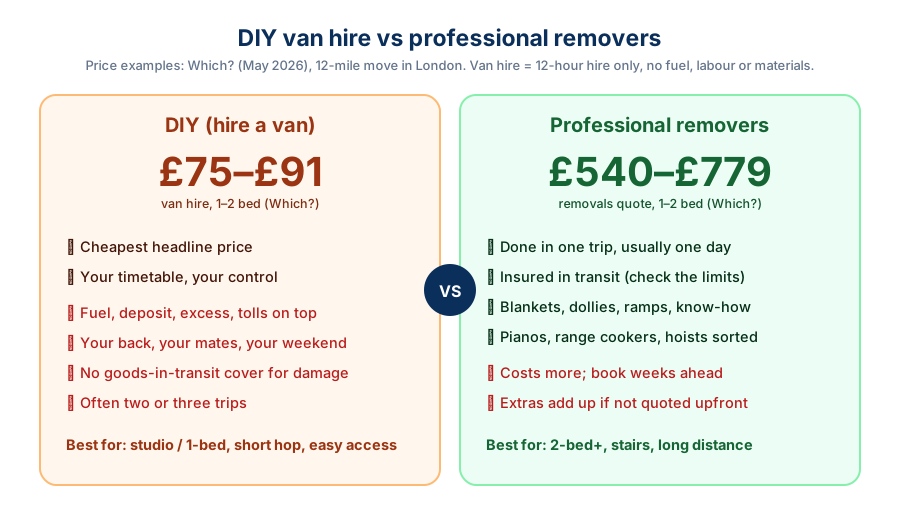
Removers are honest about this: for a studio or a light one-bed going round the corner, a hired van and two strong mates can be the right call. Beyond that, the sums change fast once you count fuel, extra trips, a lost weekend and the cost of a scraped banister.
🧰 DIY van hire
- Lowest headline cost: Which? found £75–£91 for a 12-hour van in London (1–2 bed)
- Total control over timings
- Fine for small, local moves with ground-floor access
- Fuel, damage excess, deposit, congestion/ULEZ charges are extra
- No goods-in-transit cover for your belongings
- Two or three trips are common; you're paying for the time
- Injury risk: wardrobes and washing machines don't care about your back
- Which? doesn't recommend DIY for homes over 2 bedrooms
🚚 Professional removers
- One trip, one day, done, with blankets, dollies, ramps and floor protection
- Goods-in-transit & public liability insurance (check the limits)
- Can dismantle, pack, store, hoist and handle specialist items
- BAR members: audited, Trading Standards-approved code, free ombudsman
- Costs more: Which? quotes were £540–£779 for 1–2 bed
- Popular dates book up weeks ahead
- Extras add up if they weren't in the written quote
Money-saving tips from inside the trade
Dodge Fridays & month-end
Fridays, bank holidays and the last days of the month are when most completions land, so diaries fill and discounts vanish [14]. A Tuesday mid-month is a remover's quiet day. February is the cheapest month on average (~£1,020) and August and November the dearest (~£1,190) [1].
Declutter by the cubic foot
You pay for volume and time. That spare-room bed, the exercise bike, the garage full of "might need it" all cost money to move. Sell, donate or tip them before the survey so the quote is smaller from the start.
Ask for a part-load
For long moves with flexible dates, sharing a lorry (part-load or return-load) can be 15–30% cheaper [1]. The trade-off is that you don't pick the exact day.
Get a fixed price
Hourly rates suit small local jobs. For bigger homes, tricky access or long distance, a fixed price puts the overrun risk on the firm, not you [1].
Quote from the other end
Moving to a cheaper region? Get a quote from a firm based where you're moving to. Which? notes their prices may be more competitive [5], and they may be glad of a return load.
Plan for late keys
Ask about waiting-time rates and whether a Late Key Waiver or similar cover is available [1]. Keys are often released early afternoon, after the money moves down the chain, so don't book the crew for a 7am start at the new house.
Compare like-for-like
Line up VAT, insurance limits, number of trips, floor protection and dismantling across every quote [1]. The cheapest-looking quote is often the one that left things out.
Label by room, not contents
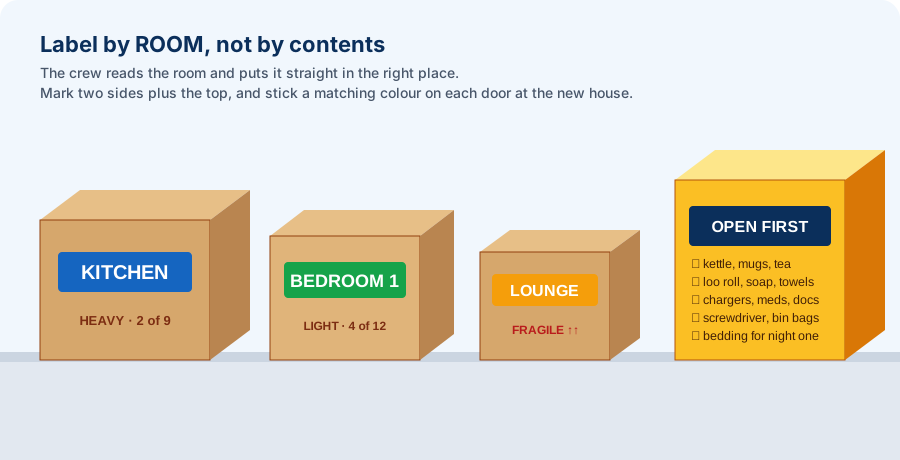
"BEDROOM 2" on two sides and the top tells the crew where it goes. "Misc stuff" tells them nothing. Put a matching coloured sticker on each door at the new house and unloading goes noticeably faster.
Pack an "open first" box
Kettle, mugs, tea, loo roll, chargers, medication, documents, a screwdriver, bin bags, bedding for night one. It travels in your car. Every remover has a story about the lorry with the kettle on it stuck on the M6.
Red flags: how to spot a rogue mover
Most firms are honest grafters. But there are cowboys about, and they go after people in a hurry. Walk away if you see these:
⚠Big cash deposit
Large up-front payment, cash or bank transfer only, no written terms. A proper firm sends a written contract, and BAR members' customer prepayments for home moves are protected by a payment guarantee scheme [15].
⚠No survey, just a number
A firm that prices a 4-bed house over the phone without seeing it, or asking about loft, stairs and parking, is either guessing or planning to "re-quote" on the day.
⚠Way below the rest
If one quote is hundreds below four others, ask what's missing: insurance, dismantling, a second trip, the ferry? Cheap isn't cheap if it takes three trips and leaves you uninsured [1].
⚠Vague on insurance
Ask for proof of goods-in-transit and public liability cover, plus the per-item limit and the claim time limit [5]. "Don't worry, we're covered" isn't an answer.
⚠No address, no landline
Mobile number only, no registered address, and reviews only on their own website. Check independent reviews and Companies House.
If something goes wrong with a BAR member: complain to the firm first. If it isn't resolved (a final response, or 8 weeks passed), you can take it to FHIO within 12 months of the move [16].
Moving-week timeline & checklist
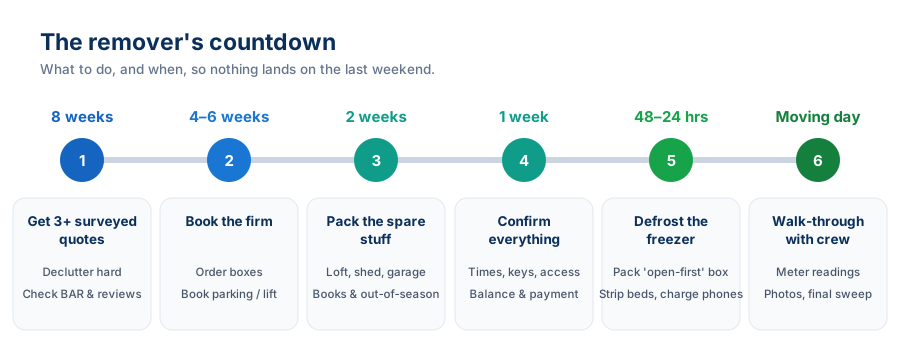
- Get at least three quotes, ideally surveyed [5]. Show the loft, shed and garage
- Declutter hard before the survey, not after
- Check BAR membership, insurance and independent reviews
- Measure big furniture against doors and stairs at the new place
- Book the firm. London firms advise 2–4 weeks' notice, or six for summer and month-ends [6]
- Apply for parking suspensions at both ends; book goods lifts and loading bays
- Arrange specialists: piano, range-cooker disconnection, hoist
- Order boxes and book storage if there's a gap
- Pack loft, shed, garage, books and out-of-season clothes
- Start running down the freezer
- Redirect post; tell utilities, council tax, DVLA, bank
- Confirm pets and childcare for the day
- Confirm arrival times, both addresses, access notes and the balance due
- Ask your solicitor or conveyancer about expected key-release time
- Label every box by room on two sides plus the top
- Dismantle what you've agreed to; bag and tape screws to the furniture
- Defrost the freezer and leave the door ajar
- Pack the "open first" box. It goes in your car
- Strip beds, charge phones, get cash or tea and biscuits in for the crew
- Keep valuables, jewellery, passports and documents with you
- Walk the crew round: what goes, what stays, what's fragile
- Take meter readings and photos at both properties
- Do a final sweep: loft, cupboards, shed, under the stairs
- Check the inventory before the crew leaves; note damage straight away
Removal costs: frequently asked questions
How much do removals cost in the UK in 2026?
Konnect You (formerly Compare My Move) reports an average of £1,080 across 8,598 verified moves (2022–2026): about £466 for a 1-bed, £834 for a 2-bed, £1,252 for a 3-bed, £1,803 for a 4-bed and £2,661 for a 5-bed [1]. Treat these as guide prices. Your quote depends on volume, access, distance and extras.
Why do removal quotes for the same move vary so much?
Each firm prices what it thinks the job involves. One allows for stairs, parking, a long carry and dismantling; another quotes the bare minimum and adds the rest on the day. In Cardiff the average gap between the cheapest and dearest quote for the same move was £564 [7], and in Glasgow often £519 or more [8]. Compare line by line.
Is a video survey as good as a home visit?
For a straightforward flat, usually yes. For houses, the trouble is what doesn't get shown: loft, shed, garage, under-stairs cupboards and the garden. Walk the camera through all of those, show the stairs and the street, or ask for a home visit.
What's the cheapest day or month to move house?
Midweek, mid-month and off-peak. February is the cheapest month on average (~£1,020) while August and November peak at nearly £1,190 [1]. Fridays, bank holidays and month-ends are the busiest days [14].
Does removal insurance cover boxes I pack myself?
Often not fully. Which? warns a firm's insurance won't cover items you've packed, and many policies cap liability per item or per box unless you declare the value [5]. Let the firm pack breakables and get the limits in writing.
What happens if our keys are released late on completion day?
Most firms charge waiting time once the crew is held up, and if you can't get in at all your goods may stay on the lorry overnight or go into storage at extra cost. Ask about waiting-time rates and whether a Late Key Waiver or similar is available before you book [1].
How do I check a removal company is legitimate?
Get proof of goods-in-transit and public liability insurance, a written itemised quote and a physical address. Check BAR membership on bar.co.uk. Members are audited annually, follow a Trading Standards-approved code, and their customers can use the free FHIO ombudsman [15].
Should I tip my removal team?
It's not expected, but £10–£20 per person is a fair gesture if the crew has worked hard [6]. Tea, coffee and lunch always go down well, and removers tell us the crew remembers it.
Ready to see what your move costs?
Averages only get you so far. Tell us about your move once and get up to 5 free quotes from local removal companies, then compare them like-for-like.
- ✔ Free & no obligation
- ✔ Takes about a minute
- ✔ Local, insured firms
Sources & methodology
All figures are indicative, in GBP and from the year shown. They are guide prices, not quotes. Where we couldn't find published data, we say so and describe the direction of travel instead. Accessed 13 October 2026.
- Konnect You (formerly Compare My Move), "How Much Do House Removals Cost?", updated 30 Sept 2026: 8,598 verified moves 2022–2026, size averages, distance uplifts, extras, seasonal and city data.
- reallymoving 2026 Cost of Moving Report, as reported by Mortgage Strategy (5 Oct 2026) and The Intermediary (Oct 2026): removals under 30 miles £624 (from £709).
- Checkatrade, "House removal costs in the UK (2026 price guide)", last updated March 2026, and storage costs, Aug 2026.
- MovingCost, "Average Removal Costs UK 2026": 1,200+ completed ~100-mile moves from one Northampton removal firm; typical volumes.
- Which?, "How to choose the best removals company", 23 Jun 2026 (prices correct May 2026).
- Konnect You, London removal companies & FAQs, 2026.
- Konnect You, "How Much Do Removals Cost in Cardiff?", updated 30 Sept 2026 (citing Cardiff Council for waiver fees).
- Konnect You, Glasgow removal costs 2026, Glasgow and Edinburgh pages.
- MovingCost, Removal costs in Scotland and Removal costs in Belfast, 2026 (modelled estimate ranges).
- Lewisham Council, Parking bay suspension, published 20 May 2026.
- Giant Van, UK Moving Cost Report 2026: regional index versus national baseline.
- NorthLink Ferries, 2026 fares: domestic vehicle fares.
- Konnect You, Belfast removal companies local access notes, 2026.
- British Association of Removers, BAR/TSI consumer leaflet (Fridays & bank holidays busiest); MoneySavingExpert, Moving home checklist.
- British Association of Removers, bar.co.uk: membership benefits, annual audit, CTSI code, payment guarantee, FHIO.
- BAR, What to do if something goes wrong, and FHIO consumer guide (Nov 2025).
Prices on this page are indicative guide figures from the sources listed and are not quotes. Always get a written quote from your chosen remover.